Friday, July 15, 2016

Topic #7: Research Illiteracy

Grasping at Headlines: Research Illiteracy Fuels the Fire of Racism


Yesterday I browsed upon the following headline you may have heard about:

"No racial bias in police shootings, study by Harvard professor shows."


As a person trained in empirical research myself I decided this was worth a closer look, and the closer I looked the uglier it became. Like most things shared on social media, the claim made by this bold headline reveals more about the people who share it than the content of the actual news piece itself. The research methodology used in the study and the media interpretations of the findings are so problematic that its best purpose would be to teach graduate student researchers what not to do. So what, exactly, makes this study so full of holes?


Problem 1: The study in question is not, in fact, published research.

The study, posted on the author's homepage, shows that it is not actually a published article but a "working paper." The piece has not been accepted in a peer reviewed journal, which is the basic requirement for research to be considered valid and useful. Why? Because otherwise, this blog would be considered published by virtue of me posting it online, and the verbal survey I administered to my family about what to have for dinner would be considered research. If we put stock in every working paper, most of which never make it to peer-reviewed publication because of methodological or other flaws, then we would be consumers of ideas that are not grounded in fact and real findings. We would be following the messy trial and error learning curve associated with poorly conducted studies by graduate students and other research amateurs trying to make a name for themselves. 

I'm not suggesting that the head researcher of this project is an amateur, only that his association with Harvard and the fact that he's written a paper mean nothing until a panel of experts in his area of research have scrutinized the study with a fine tooth comb to make sure it meets the standards of a peer reviewed journal. Having submitted studies of my own, some of which have been accepted for publication and others that have been rejected, I can attest that the review process is rigorous, critical and highly necessary so that the research on which we rely for our statistics and consequential policies is accurate.
Problem 2: The researcher uses an insufficient and biased sample.

The police departments represented in this study make up a sample size called "exceedingly small" by Snopes.com (and by any researcher or first-semester graduate student). An insufficient sample size is enough to get this working paper rejected from publication outright. 

Furthermore, to understand lethal use of force the author looked at only one of the cities he studied. This is called data manipulation, and it's pretty easy to do when a researcher is seeking to support his hypothesis (hence, the requirement of peer review). According to The Guardian, "Looking at just one other city would suggest very different conclusions. In Chicago, a review of the reports of each police-involved shooting looked at fatal and non-fatal shootings. Despite the city being one third black, a disproportionate 118 black males (44 of them fatal) were involved in the 150 shootings recorded since 2010." (https://goo.gl/8D0McX). The fact that the study's findings don't apply beyond the specific places examined breaks the basic research tenet of generalizability. To be useful it must be generalizable beyond the small sample studied. 

Perhaps worst of all, this study relies on information that was volunteered by police departments. We are not getting any data from police departments that were unwilling to cooperate (read: ones that know their numbers show biases). Last but not least, the data were collected by interviewing police officers and coding their narratives rather than considering the testimonials of witnesses or suspects. This is called "self-report" and is considered by most empirical scientists the most unreliable type of data a researcher can collect.


Problem 3: The researcher's project to disprove racial bias by police is anonymously funded.

Huh? I can't even waste time explaining the problem with this.


Problem 4: The study has not demonstrated replicability.

As explained in one article, "Fryer’s conclusions about police use of lethal force will have to be reconciled relative to work by Cody Ross [and others] which shows that America’s cops are at least 3 times more likely to shoot unarmed black people than they are unarmed whites. Likewise, social psychologists and others have demonstrated that subconscious racism/implicit bias influences police to shoot black people faster than whites." (http://goo.gl/3Z5fHt). One of the most basic and important rules of research is that a study must be able to be replicated with the same results in order to be considered valid. On these grounds, multitudes of suspicious research findings have been rejected and even revoked from the literature. Fryer's single study contradicting an entire literature base (not to mention the collective testimony of the Black lived experience) will have to be tested across better samples, with the exact same or similar results for it to be considered useful in any way. 


It's generally the fault of main stream media when a research study is misinterpreted, which is why my instinctive reaction is to kindly ask folks who quote it whether or not they read the entire study for themselves. All told, I'm less concerned with the quality and applicability of one study's findings, and more concerned with the excitement expressed by the those seeking evidence to derail the movement for racial justice in our country. Unquestioningly sharing one unfounded claim by someone representing a prestigious institution reveals more about you than it reveals about the reality of racial disparity. In short, it shows a lack of critical thinking skills, inability to read and evaluate academic research, and over reliance on dangerous and erroneous media soundbites.

The mountain of evidence in support of our country's need to address and remedy racial disparity speaks for itself, and those still refusing to accept it are desperately grasping at their dying white supremacy and privilege. To their great disappointment, the paper written by Roland Fryer won't be enough, or even close to enough, to keep it alive.



Monday, July 11, 2016

Topic #6: Know What You Stand For


Thanks to social media (and BeyoncĂ©), the word “feminism,” its history, and its actual definition (*the belief that men and women should have equal rights and opportunities) have become destigmatized to such a degree that by now any thinking person would have little problem with being called a feminist, or even self-proclaiming the label. To say you are specifically not a feminist would suggest that you do not believe men and women should have equal rights, so it's a no brainer, right?

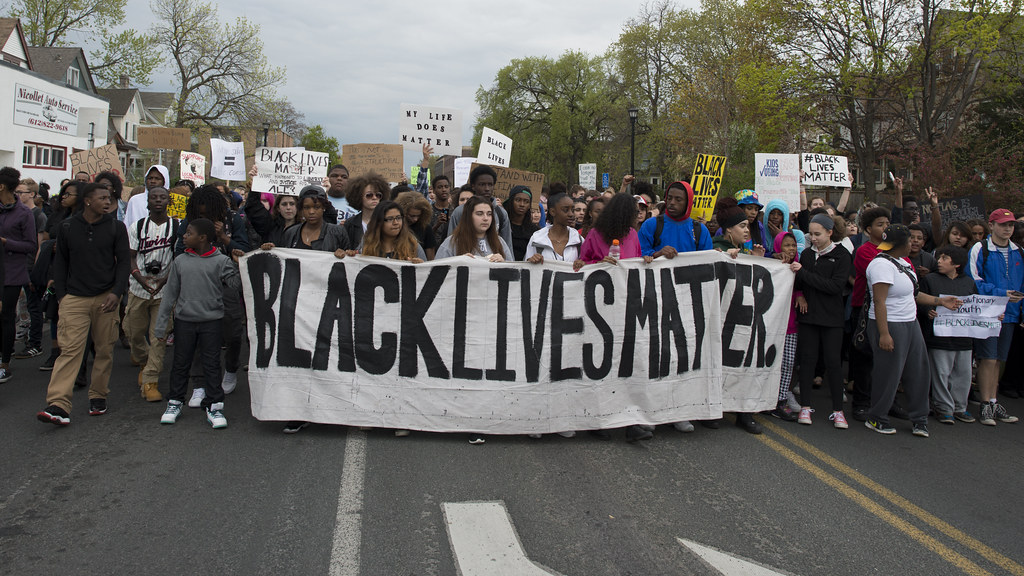
I’m convinced that the same awakening is overdue from folks who are hesitant to call themselves supporters of Black Lives Matter.

If you are unsure about how clearly or loudly to voice your support, or whether to voice your support at all, review the following Black Lives Matter Guiding Principles from their official webpage (http://blacklivesmatter.com/guiding-principles/) and ask yourself what it means to not support Black Lives Matter. In short, it means that you disagree with or do not stand for the following:
  • Empathy: We are committed to practicing empathy; we engage comrades with the intent to learn about and connect with their contexts.
  • Loving Engagement: We are committed to embodying and practicing justice, liberation, and peace in our engagements with one another.
  • Diversity: We are committed to acknowledging, respecting and celebrating difference(s) and commonalities.
  • Restorative Justice: We are committed to collectively, lovingly and courageously working vigorously for freedom and justice for Black people and, by extension all people. As we forge our path, we intentionally build and nurture a beloved community that is bonded together through a beautiful struggle that is restorative, not depleting.
  • Globalism: We see ourselves as part of the global Black family and we are aware of the different ways we are impacted or privileged as Black folk who exist in different parts of the world.
  • Collective Value: We are guided by the fact that all Black lives, regardless of actual or perceived sexual identity, gender identity, gender expression, economic status, ability, disability, religious beliefs or disbeliefs, immigration status or location.
  • Black Villages: We are committed to disrupting the Western-prescribed nuclear family structure requirement by supporting each other as extended families and “villages” that collectively care for one another, and especially “our” children to the degree that mothers, parents and children are comfortable.
  • Black Families: We are committed to making our spaces family-friendly and enabling  parents to fully participate with their children. We are committed to dismantling the patriarchal practice that requires mothers to work “double shifts” that require them to mother in private even as they participate in justice work.
  • Intergenerational Involvement: We are committed to fostering an intergenerational and communal network free from ageism. We believe that all people, regardless of age, show up with capacity to lead and learn.
  • Transgender Affirming: We are committed to embracing and making space for trans brothers and sisters to participate and lead. We are committed to being self-reflexive and doing the work required to dismantle cis-gender privilege and uplift Black trans folk, especially Black trans women who continue to be disproportionately impacted by trans-antagonistic violence.
  • Queer Affirming: We are committed to fostering a queer‐affirming network. When we gather, we do so with the intention of freeing ourselves from the tight grip of heteronormative thinking or, rather, the belief that all in the world are heterosexual unless s/he or they disclose otherwise.
  • Unapologetically Black Positioning: We are unapologetically Black in our positioning. In affirming that Black Lives Matter, we need not qualify our position. To love and desire freedom and justice for ourselves is a necessary prerequisite for wanting the same for others.

Forget the diversion of focusing on the few individuals who misrepresent the movement, because sadly, every worthy movement has those.

If you support these principles, the time to act is now. Share something (like this piece you're reading), join something (like this organization: http://www.showingupforracialjustice.org/), wear something (like this shirt: https://blckstore.org/products/blcklives-awareness-t-shirt-unisex), or go somewhere (like this meeting: https://www.facebook.com/events/1305318102811984/) and show that you agree with making an ideological and political intervention in a world where Black lives are systematically devalued. All lives do matter, so let’s unequivocally voice that Black Lives Matter to us, too.

Image result for white people for black lives


Monday, July 4, 2016

Topic #5: Imposter Syndrome and White Silence

Topic #5: Imposter Syndrome and White Silence.
This article was published in Elephant Journal. Please click here to read it.

Monday, May 23, 2016

Topic #4: Chronic White Niceness is Killing Us

Today Baltimore police officer Edward Nero was found not guilty on all charges. In addition to arresting 25 year old Freddie Gray without probable cause, Nero failed to buckle him into a seat in the police van, causing Gray's neck to be broken during transport while he was handcuffed and shackled. Gray died of an injury to the spinal cord, which medical investigators confirmed to have occurred while in the police van.

As I heard this news I happened to be leafing through my agenda for next week’s National Conference for Race & Ethnicity in American Higher Education.
Among the many excellent panels I plan to attend, I’m particularly drawn to these:

“Nothing to Add: A Challenge to White Silence in Racial Discussions”

Where Are All the White People? Strategies for Engaging White People in Collective Action for Racial Justice”

And this one:

“White Fragility”

Looks like I’m not the only one perplexed by the crickets that answer a Facebook post on police brutality when a cute kid video gets 57 reactions.

Let me be clear, this isn’t a commentary on anyone’s apathy or evil nature, but rather a straight forward accusation that you’re too damn nice. For exactly the same reason that I love you, I want to shake you silly. White friends, please, you need to stop being so nice, and this piece will explain why.

When you learn that a bombastic xenophobic racist won another state in the presidential primary, do you ever find yourself pondering the question, "WHO EXACTLY ARE THESE VOTERS!?" To help answer your question the Southern Poverty Law Center (SPLC), a watchdog group for social injustice, has conveniently pointed them out on a map that tracks hate groups across America: 


SPLC Hate Map

If this terrifying Hate Map of the USA doesn’t light a fire under your Lily White behind, then I don’t know what will. When our country has 892 verifiable and active hate groups, which is up 14% from last year, no one is safe.  These folks are loud. They are busy. And unless you’re louder and busier, they will win.


SPLC Number of Hate Groups 1999-2015
https://www.splcenter.org/file/11756


Not feeling so nice anymore? Good.

In the Salon article, What Chris Rock Got Wrong: ‘Nice’ White People Perpetuate White Supremacy,” the author writes the following about Eric Garner's killers, but he might as well have been writing about the police officers who murdered Freddie Gray:

“The officer who applied that pressure to [Eric] Garner’s neck might himself be ‘nice’ in the sense that he is kind to old people, babies and animals. Likewise, the grand jury that decided not to indict him for any crime might well have been filled with nice people, who send get-well cards to sick friends and relatives, participate in Secret Santa at work and volunteer at the local food bank. And what of it? Their niceness, however real it may be in some abstract sense, means nothing.” (http://goo.gl/XAY1yy)

As it turns out, being nice has little to do with playing an active role in creating a just and safe world. Surely you’ll agree that not much has ever changed when pioneers of a social movement were concerned with being regarded as “nice.” But, alas, our politeness is ingrained in our own white cultural value system, and it’s a way of existing that won’t easily be changed. We scream into pillows. We drink martinis. We use passive aggressiveness. We’ll do anything to suppress what we consider the greatest indication of having lost all control: Anger.

As such, it’s probably safe to assume that you’re not the type to attend a rally or get into a heated debate with a stranger. It’s okay, neither am I- that’s why I’m blogging. You can express outrage without giving up your sense of control and without others suspecting that you may have lost your mind. How about choosing a method that’s more your speed, like sharing a few posts on Facebook? 

Why is this suddenly your job? Because the people and organizations whose real job it is are not doing their job

According to the agenda setting theory, our news media single handedly determine what we consider important, and therefore have a large influence on what we believe is true. The news to which we’re exposed creates an alternate reality that is a far cry from what’s really happening in the world. Research studies consistently find that in their attempt to draw interest, media sources distort the public sense of who commits crimes and how often. Case in point: White Americans are overrepresented as victims of crimes perpetrated by people of color, the number of crimes committed by black Americans is exaggerated, and the victimization of black Americans is downplayed. In fact, the majority of US homicides are intra-racial, but media accounts often portray the majority of offenders as black males. (http://goo.gl/2ALWHS)

Social media outlets are the worst offenders because they trick us into believing that we control what we see. The Guardian lays out the power of Facebook to determine something as grand as the American presidential election, explaining that paying advertisers are “faceless engineers that control what pops up in your news feed.” (http://goo.gl/m3nX3D) Social media expert Xeni Jardin calls Facebook a “pay to play operation” meaning that publishers pay to boost posts, and guess who’s paying the most? Fox news has the most shared content of all the organizations on Facebook and Donald Trump has the most likes of any presidential candidate ever. If you’re familiar with how Facebook works, this means more people are likely to receive content shared by Fox News and Donald Trump than from any other source. Jardin warns, “Never in history has one news outlet had this much control over the content we receive.” (http://goo.gl/O2Crgv)

If you’re interested in being a change maker, or a white ally, or simply more than a really nice person who is accidentally part of the problem, my challenge for you today is so easy. It only involves going to battle with America’s largest and most powerful social media network.

Here’s how you do it: Simply Like some Facebook pages that will give you news feeds inspiring you to rise and shine like the good citizen you are. Then, in the spirit of being Fair and Balanced, share the content you think might get "overlooked" by more traditional news sources. 

Here’s how:   
1. Type each name from the list below into the search bar on your Facebook page.
2. Ignore the first options, which are internet searches, and select from the option that appears in the lower area to actually go to their FB page.
3. Like it
4. Don't forget this important step: Click the "Liked" icon to see the drop down menu, and select "See first" so this page's posts show up in your regular feed.

Here are some of my personal favorites, for starters:
The Woke Folk
White People Challenging Racism 
Racism Review
Showing Up for Racial Justice 865
NAACP
Gathering for Justice
Innocence Project
For Harriet
Black Lives Matter
BYP 100
Let's Talk: Whiteness Project

Please feel free to contribute to the conversation by replying to my post of this article with other pages we can Like to get better access to news stories related to social justice. And don’t forget to share, share, share.

Oh, one last thing. As a fellow sufferer of chronic Need-To-Be-Nice Syndrome, I’d just like to say that I hope I haven’t hurt your feelings by saying I have an issue with you, and I really hope you still like me.  


Tuesday, May 10, 2016

Topic #3: Fear, Discomfort, and Diving In

Striving to be a white ally can feel like complicated business. It’s easier to do it wrong than to do it right, so why risk speaking out and looking foolish?

I hear you.

My first blog post was intended for a mainly white audience. Research shows that people can be most effective by working within their own groups to make change, so this was my mission. But before I knew it, my black friend shared my post on his Facebook page and then his Latina friend shared it, and next thing you know I’m speaking to a much wider audience in number and color than I had originally planned. I started getting reeeeeal nervous because I was certain something I wrote was imperfect or inaccurate and I would look like a damn white fool.

And then I was like #fuckit.

Dear white friends: I challenge you to acknowledge your fear and discomfort, and to accept that it’s not a good reason to be silent about injustice. I wish it weren’t necessary to do more than we're already doing, but it is. Admit it with me: Us white folks dip our toes into the murky waters of activism by posting (clearly ineffective) insults at Donald Trump, but we get squeamish about sharing posts on cross burnings (like the one in Dubuque, Iowa two weeks ago that you never heard about) and police shootings (there were 102 for you to report on Facebook in 2015 alone, that’s about 2 per week). Maybe you’re a liberal, but you don’t want to be perceived as hysterical, or heaven forbid, as a negative person. I get it, I really do. But I need your help. If we want to claim that we’re doing something, then we need to do more. Please give me a shout out, share it, or have a conversation this week about what you read here. I’ll be looking for your thumb on Facebook. Yes, you.

This piece will focus on ways to be a more compassionate and useful advocate for social justice and racial equality, with the goal of alleviating some of the uncertainty and nervousness that occurs while stepping into unfamiliar water. I hope to save you time by summarizing tips I’ve found from other white allies and people of color, including mistakes folks have made along the way and careful attention to what works. The list is by no means comprehensive, but rather a draft in progress. Dive in with me.

THE “TO DO” CHECKLIST FOR PEOPLE STRIVING TO BE WHITE ALLIES

Listen.
Or, “shut up and listen,” as stated by Mia McKenzie on her brilliant webpage Blackgirldangerous.org. Being an ally is about listening, and then listening some more. By listening some more, I mean that just because one person of color says something is okay or not okay doesn’t mean he or she speaks for all. Case in point: When comedian Larry Wilmore directed the n-word at President Obama during the White House Correspondents' Association Dinner, people went crazy complaining about the double standard. Shortly after, the NAACP made an official statement claiming that the organization believes using the word is unacceptable in any context (http://goo.gl/urBL0u).

Here’s another example: You may have noticed that I don’t capitalize the terms “black” or “white,” but I do capitalize the terms Native American and Latina. My choice comes from research on the appropriate way to list a physical description versus regional association, and the complications that come with using the terms European-American or African-American in this context. However, if you try and research this issue yourself you’ll find that there are a variety of opinions out there, and little agreement between people of the same race. (http://goo.gl/F6xOmI). So I'm trying it this way, but if you don't like it, I'm listening.

Apologize.
We all blow it sometimes, so let’s apologize when we screw up. If someone says I’ve overstepped, I don’t need to agree with why it was hurtful, but I can still apologize for something I said or did that caused harm. Seeking to understand why it hurt is important, but if at the end of the day I just don’t get it, I can still acknowledge that I’m seeking to understand, and apologize to help repair the damage. Consider upgrading to the Platinum Rule, “Do unto others as he or she would have done to them,” rather than using the good old Golden Rule, which simply advises that we treat others how we ourselves would want to be treated.

Give props.
“Part of being an ally means giving credit where credit is due and never taking credit for the anti-oppressive thinking, writing, theorizing, and action of the marginalized and oppressed.” (Jamie Utt, everydayfeminism.com/). Just because we’re speaking out doesn’t mean we created these ideas. When in doubt, cite, cite, cite. We know our history books are biased, so let’s start repairing the damage by giving props where they belong. We hope our voices help amplify ideas that originated with and continue to be championed by people of color.

Learn about intersectionality.
Intersectionality describes the ways in which oppressive institutions (racism, sexism, homophobia, classism, etc.) are interconnected. White feminism is a perfect example. “Too often, white women refuse to name the ways in which they play vital roles in upholding white supremacy. We tend to engender white supremacy and see it as a white man’s problem” (thefeministgriote.com).
It should come as no surprise that black and Latina women are ticked off that we call ourselves feminists when:
-       We claim that women got the right to vote in 1920 when in reality, some women of color did not get the right to vote until the 1960’s.
-       We know names like Gloria Steinem and Betty Frieden but not Audre Lorde or Alfonsina Storni. Quick: Who are they?
-       We fail to recognize how much the wage gap depends on race. We constantly mention that American women make 78 cents to every dollar made by a man, but we forget to add that Hispanic women earn 54 percent, followed by black women at 64 percent, and Native American women at 65 percent to the dollar of every white man in America (newrepublic.com).

THE “DON’T” CHECKLIST FOR PEOPLE STRIVING TO BE WHITE ALLIES

Don’t confuse "doing no harm" with "doing the right thing."
Yes, I’m a product of the paradigm in which I was raised, of course I didn’t enslave anyone personally, and no, I don’t condone racist language. Those aren’t good reasons for me to be silent instead of actively and loudly fighting for equality and social justice. Doing the right thing is entirely different than not doing something wrong. 

Don’t say you understand how someone feels when you couldn’t possibly.
As stated by Dr. Joy DeGruy, white people enter the conversation at the 100 level (referring to prerequisite-level college courses). People of color enter the conversation at the 600 level (referring to graduate-level college courses) simply due to the imbalance in our direct experience with racism. It doesn’t matter that I studied abroad in a place where I was a minority or that I’ve experienced discrimination because I’m a woman. My ancestors were not collectively enslaved by another race that continues to oppress me, so I really just don’t understand.

Don’t make it about you.
It’s understandable to feel defensive when learning about white privilege. I can’t tell you how many of my students respond by saying they’re offended, they feel targeted, stereotyped, or the victim or reverse racism. Ya’ll remember the Princeton student who wrote the piece that went viral called “Why I’ll Never Apologize for My White Male Privilege” (http://goo.gl/RmZCEH)? Yeah. Social science researcher Aaron Cargile was so sick of hearing this crap from students that he did a study where he developed a taxonomy of predictable defensive responses to learning about white privilege, which he aptly titled, “Why Are You Shoving This Stuff Down Our Throats?” Preparing Intercultural Educators to Challenge Performances of White Racism. Here’s the gist: We should expect white recipients of the message to get defensive, it’s natural. But if we hand over the mic to try and make them feel better, the entire message gets muddled and we’re back to square one, which is focusing on white people’s experience and feelings at the expense of making progress.

Don’t think that claiming you are a white ally makes you one.
“Being in solidarity is something we can strive for, but in the end, it is the choice of those we are attempting to ally ourselves to as to whether they trust us enough to call us an ally.” (Jamie Utt, http://everydayfeminism.com/).

Being an ally is not about claiming an identity, but rather about action. It’s about showing that you’re willing to risk the approval and liking of your complacent friends in order to recognize and speak out about racism. If we're unwilling to do even this then we'll never gain the trust we're seeking from people of color.

In the must-read article Organizing White People, (http://goo.gl/7oM0zL), Ella Mahony captures it brilliantly with the following Malcom X quote:

“Where the really sincere white people have got to do their “proving” of themselves [as anti-racist] is not among the black victims, but out on the battle lines of where America’s racism really is — and that’s in their own home communities; America’s racism is among their fellow whites. That’s where sincere whites who really mean to accomplish something have got to work…”


So what do you say, friends? Won’t you dive in with me?


Image result for facebook like


Monday, May 2, 2016

Topic #2: Who is Assata Shakur? & Post Traumatic Slave Syndrome

It's May 2nd, the 43rd anniversary of Assata Shakur's famous arrest. 

What? You've never heard about it? No kidding.


Assata Shakur is a black activist most famous for being racially targeted by the New Jersey Police Department and later the FBI. She was the target of a massive manhunt from 1971-73, culminating in her arrest when white police officers stopped the car in which she was traveling, citing a broken taillight. After her capture she was not charged with any of the crimes that had made her the subject of the manhunt. However, she was convicted by an all white jury for shooting white police officers during the traffic stop, even though forensic evidence showed that there was no gunpowder on her fingers and that she herself was shot in the back by another officer while her hands were raised in surrender. Assata was held in inhumane conditions in an all-men's prison, confirmed by the United Nations Commission on Human Rights, who in 1979 cited her case as "one of the worst cases of human rights abuses" and called her a "victim of FBI misconduct" who was "selectively targeted for provocation, false arrests, entrapment, fabrication of evidence, and spurious criminal prosecutions." (http://goo.gl/fKB13V). If you watched the Black Panthers documentary on PBS you know that unlawful arrests, entrapment, and murder were common strategies of the FBI's COINTELPRO branch, whose job it was "to pinpoint potential troublemakers and neutralize them before they exercise their potential for violence..." and to prevent black leaders "from gaining respectability, by discrediting them to both the responsible community and to liberals who have vestiges of sympathy…" (http://goo.gl/8RfWuR). With the aid of fellow activists, Assata escaped prison in 1979 and was ultimately granted political asylum in Cuba where she now lives. 

I was about to launch further into this topic when I nearly forgot to mention one little thing: The prerequisites. To be clear, if you don't believe that racism is inextricably embedded in the very fabric of our nation due to our shameful history of dehumanizing black people and the residue it has left on our current worldview, then you should most definitely complete the following prerequisites before proceeding. 

I borrowed the concept of prerequisites to racism education from the brilliant and distinguished Dr. Joy DeGruy, a scholar I met through a YouTube link provided by my new friend, activist, and musician Glenn Waco (check out his new release, Assata, here: https://soundcloud.com/glenn-waco/assata). You can determine your own necessity for the prerequisites with a simple self-quiz:
  1. Let's start with an easy one: Roughly how many years did slavery last in the United States of America?
  2. What does the word "chattel" mean in reference to slavery?
  3. Other than a few small groups of white abolitionists who believed slavery was a sin, what was the reason cited by most white abolitionists to end slavery?
  4. According to the U.S.. Constitution after the American Revolution, what "percentage of a person" was a slave? (Meaning, 1/2 of a "real" person, 3/4 of a "real" person, etc.)
  5. When and where else in the world has human chattel slavery lasted as long as it did in America?
  6. What is the estimated number of people who died while being transported overseas?
Here's my point: White people think we know about slavery because we learned about it in school and watched Twelve Years a Slave. But if we don't even know these basic facts off hand, how can we really be sympathetic to what Dr. DeGruy calls Post Traumatic Slave Syndrome, which by her account can explain a lot of the stuff us white people just do not understand about the black experience? Before I get into all that, here are the answers to the quiz. 
  1. Human chattel slavery lasted from about 1619 to about 1863, so roughly 250 years.
  2. Chattel is an item of property. Human chattel slavery is the proper name for what our textbooks call "slavery," during which humans were bought and sold and considered personal property of an owner who had full discretion over his or her treatment. This is the least prevalent form of slavery in the world today, and has been exceptionally rare across the globe throughout history. 
  3. After the American Revolution in 1783 the new U.S. Constitution counted each person who was a slave as 3/5 a person.
  4. The majority of abolitionists argued that slavery should end because it was inefficient and made little economic sense.
  5. No other society has had a system of slavery like ours. American human chattel slavery is unlike anything anywhere else in the world in terms of the following:
    1. Duration- more than 200 years
    2. Race-based- slavery in other countries usually consisted of indentured servitude between people of the same race or ethnicity. Rarely was slavery based on one race enslaving another race and deeming the enslaved race subhuman.
    3. Subhuman status by law- most other slave contexts involved exploitation but not dehumanization supported by law. 
    4. Number killed in transport- see next item.
  6. 9 million is one estimate of the number of slaves killed merely in transport due to the conditions (18 inches per person, see below). Just to give perspective, while it's hard to compare since the Holocaust occurred over only four years, it is estimated that 6 million lives were taken by the Holocaust.
    Humans on a Slave Ship

    If your reaction to Slavery 101: Basic Facts is, "But that was so long ago, why are we still harping on it?" then you failed the prerequisites.

    On the other hand, if you can plainly see that it wasn't too long ago to have lasting residue, then let's get down to business. 

    No one gets down to business like Dr. DeGruy, who plainly and masterfully details exactly what's on the minds of many of the black members of our shared society and why they are so freaking mad. Her two hour lecture is so thorough that I can only summarize part of it here, so this piece is entirely dedicated to what she calls Post Traumatic Slave Syndrome.

    While obtaining her Master's degree in clinical psychology, Dr. DeGruy noticed some uncanny parallels between what she was learning about Post Traumatic Stress Disorder and what her and her fellow black community members felt on a regular basis. In short, Post Traumatic Slave Syndrome is the residual mental anguish experienced by members of the black community because of the collective trauma that has been passed down by generations and the persistent triggers of this trauma that continue on a regular basis today. Years after DeGruy's first lecture on PTSS we now have scientific evidence that trauma is passed down generationally via DNA by a process called epigenetic inheritance (https://goo.gl/pqqrOO). Keep in mind that our black friends, coworkers, and neighbors are only two generations removed from the institution of slavery, meaning their great grandmothers could have been victims of human chattel slavery. 

    See for yourself if you can find parallels between PTSD and PTSS. According to the Diagnostic and Statistical Manual of Mental Disorders (DSM-5), PTSD comes from exposure to traumatic events. The exposure must result from one or more of the following scenarios, in which the individual:
    • directly experiences the traumatic event;
    • witnesses the traumatic event in person;
    • learns that the traumatic event occurred to a close family member or close friend; or
    • experiences first-hand repeated or extreme exposure to aversive details of the traumatic event 
    The traumatic event is persistently re-experienced in one (or more) of the following ways:
    • recurrent and distressing recollections of the event, including images, thoughts, or perceptions
    • acting or feeling if the traumatic event were recurring (includes a sense of reliving the experience
    • intense psychological distress at exposure to internal or external cues that symbolize or resemble an aspect of the traumatic event [i.e., racial slurs]
    • physiological reactivity on exposure to internal or external cues that symbolize or resemble an aspect of the traumatic event [i.e. stop and frisk]
    Persistent symptoms are indicated by two (or more) of the following:
    1.       difficulty falling or staying asleep
    2.       irritability or outbursts of anger
    3.       difficulty concentrating 
    4.       hyper vigilance
    5.       exaggerated startle response
    "The disorder may be especially severe or long lasting when the stressor is of human design (e.g. tortune, rape). The likelihood of developing the disorder may increase as the intensity of and physical proximity to the stressor increase."

    DeGruy notes our society's willingness to diagnose Americans with PTSD from the effects of 911, even for those people who were nowhere near the event and unrelated to anyone who died, versus our unwillingness to consider that black members of our society may have PTSD from the residual effects of our culture's recent slave system. She explains, in describing the traumatic effects of both 911 and slavery:

     "It's not just the lives that were lost, but the symbol of what it meant...
    wrapped in the notion of power, and control, and stability." 

    I like Dr. DeGruy's work because her focus is on healing. How does our society heal from what we've done to each other? Validation and recognition that the trauma has occurred is a good start. Questioning our own worldview is key. Seeking information that may not have been revealed in our Euro-centric education helps. Checking ourselves any time we are tempted to discount or question the lived experience our black fellow humans are trying to share is highly recommended by the good doctor. 

    If you have 2 hours to listen to Dr. DeGruy's entire lecture you can find it here: https://goo.gl/hNiji1
    but if you just want to hear the part about PTSS start at 53:25.

    Denial of the truly horrific nature of American human chattel slavery and resistance to the fact that its effects still permeate our society comes in many forms. For example, responding to the demand that Black Lives Matter with the retort that All Lives Matter. Or being annoyed by an "unfair advantage" given to minorities for jobs and resources to even the scoreboard created by a history of inequality. But today, on this anniversary of Assata Shakur's arrest what's on my mind is this: that I, a white woman, can post a blog about government conspiracies, murders, and police corruption without even batting an eye, with no repercussions and no real consequences. I can talk about slavery and won't be met with rolling eyes or the suspicion of desiring pity. This is privilege. If you have a privileged voice like I do, please be a white ally and share.